In cultures spanning continents and centuries, the number 40 keeps appearing in the context of birth. Forty days of rest. Forty days of seclusion. Forty days of being fed, tended to, and protected from the demands of the outside world.
This is not coincidence. It is convergent wisdom — independent cultures arriving at the same conclusion through generations of observing what women need after they give birth.
Modern medicine has largely replaced traditional postpartum practices with a single six-week check and an expectation of functional recovery. What has been lost in that exchange is worth examining. And what remains of the 40-day tradition — its core logic, its practical wisdom, and its underlying understanding of what birth actually does to a body — is more relevant to Canadian mothers today than it has perhaps ever been.
What the 40-Day Rule Actually Is
The 40-day rule is not a single unified practice. It is a convergent cultural framework — appearing independently across Latin America, the Middle East, South Asia, East Asia, West Africa, and parts of Europe — that prescribes a protected period of rest, warmth, nourishment, and intensive support for a new mother in the weeks immediately following birth.
The specifics vary by culture. The underlying principles do not.
Across traditions, the 40-day postpartum period typically involves:
- Rest as a non-negotiable priority — the mother’s primary obligation is to heal and feed her baby. All other responsibilities are suspended.
- Warmth — the postpartum body is understood to be depleted and vulnerable to cold. Warm foods, warm environments, and protection from exposure are emphasized.
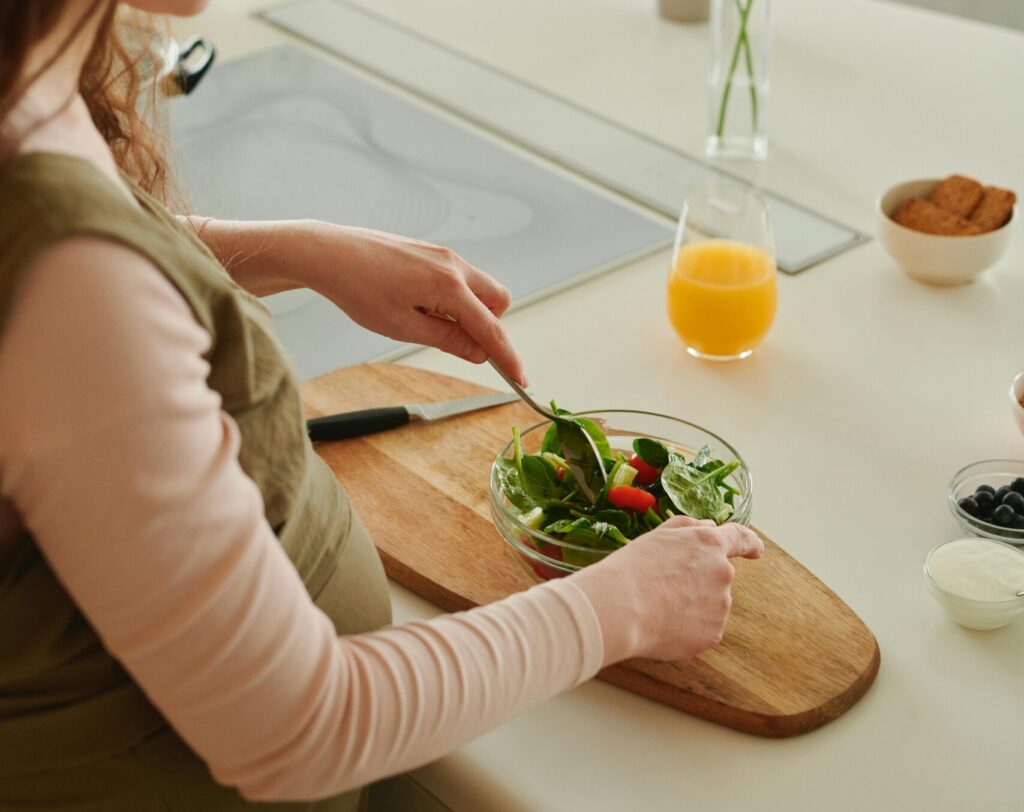
- Nourishing food prepared by others — the mother does not cook. She is fed — consistently, intentionally, with foods understood to support recovery and milk production.
- Restriction of visitors and social obligations — the mother is protected from the energy demands of socializing, entertaining, and managing other people’s experience of her baby.
- Community support as a structural feature — the labour of postpartum care is distributed across family and community, not borne alone by the mother and her partner.
The number 40 is approximate across traditions — some prescribe 30 days, some 44, some a full six weeks. What is consistent is the principle: this is a protected window, and what happens in it matters for the mother’s long-term health and recovery.
The Traditions Around the World
Understanding how different cultures have approached this period helps illustrate both its universality and its diversity.
Latin America: La Cuarentena
In Latin American tradition, the postpartum period is called la cuarentena — literally, the quarantine. The word shares its root with cuarenta, forty. For 40 days after birth, the new mother rests, is fed warming foods, and is supported by female relatives who take over household responsibilities. Certain foods — typically cold or raw — are avoided. Physical exertion is restricted. The mother’s role is singular: to recover and to care for her baby.
China: Zuò Yuèzi
The Chinese practice of zuò yuèzi — sitting the month — is one of the most structured and widely practised postpartum traditions in the world. For 30 to 40 days after birth, the new mother rests completely. She does not cook, clean, or leave the house. She is fed specific warming foods understood to replenish the blood and qi lost during birth — soups, ginger, rice wine, sesame oil. She avoids cold water, cold environments, and cold food. She is cared for by her mother or mother-in-law, or increasingly by a professional postpartum caregiver called a yuèsao.
The practice is observed by Chinese families across the world — including significant communities in Canada — and has become the subject of increasing interest from Western researchers studying its effects on postpartum recovery.
Middle East and South Asia: Al-Arba’een and Jaappa
Across the Middle East and South Asia, 40-day postpartum practices appear under various names and with cultural specificity, but share the same foundational structure. In many Arab traditions, the period is called al-arba’een — the forty. In South Asian communities, the equivalent practice — sometimes called jaappa or chilla — involves the new mother resting for 40 days while female relatives care for both mother and baby.
Warming foods — specifically foods understood to rebuild blood and restore strength — are central to these traditions. Fenugreek, dried fruits, nuts, ghee, and warming spices appear across many South Asian postpartum food traditions for their understood role in supporting milk production and maternal recovery.
West Africa
Across many West African cultures, the postpartum period is similarly structured around community care and maternal rest. Female relatives move in or visit daily to care for the household, cook, and take the baby so the mother can sleep. The new mother is bathed, massaged, and fed. She is not expected to manage her household or receive visitors on any terms other than her own.
Indigenous Canadian Traditions
Many Indigenous communities across Canada have their own traditional postpartum practices — rooted in specific cultural, spiritual, and community frameworks that vary significantly across nations. These traditions share the broad framework of community support and maternal rest, while being deeply specific to the cultural and spiritual context of each community.
The Truth and Reconciliation Commission’s calls to action include recognition of Indigenous healing practices and their integration with mainstream healthcare — a recognition that traditional knowledge about birth and postpartum recovery has value that Western medicine has been slow to acknowledge.
What Modern Science Says About the 40-Day Period
The 40-day framework is not merely cultural. It maps onto a real physiological timeline.
Uterine Involution
After birth, the uterus — which has expanded to accommodate a full-term baby — must contract back to its pre-pregnancy size. This process, called involution, takes approximately six weeks. The placental attachment site, which was the interface between the maternal and fetal circulation, heals over the same period. Until it is fully healed, it represents a wound inside the uterus — one that is vulnerable to infection and that bleeds as it heals, producing the postpartum discharge called lochia.
This is why physical rest in the early postpartum weeks is not self-indulgence. Excessive physical activity before involution is complete can increase bleeding, delay healing, and increase the risk of complications.
Hormonal Transition
The hormonal shift after birth is one of the most dramatic in human physiology. Estrogen and progesterone — which have been elevated throughout pregnancy — drop sharply within hours of delivery. Prolactin rises to support milk production. Oxytocin surges during skin-to-skin contact and breastfeeding. These shifts, happening simultaneously, have significant effects on mood, energy, cognition, and emotional regulation.
The hormonal fluctuation of the first weeks is the physiological substrate of what is commonly called the baby blues — the emotional lability, tearfulness, and emotional sensitivity that affect the majority of new mothers in the first two weeks. This is not a psychological weakness. It is a hormonal event occurring in a body that is simultaneously healing, feeding a baby, and operating on fragmented sleep.
Immune Function
Pregnancy modulates the immune system to protect the baby from rejection. After birth, that modulation lifts — but the immune system takes time to recalibrate. New mothers in the early postpartum weeks are more vulnerable to infection than they would normally be, which is one reason traditional postpartum practices across cultures restrict visitors and exposure to illness.
The Research on Rest
A growing body of research validates what traditional postpartum practices have long understood. Studies examining postpartum outcomes in women who follow traditional rest-based postpartum practices — including zuò yuèzi — have found associations with lower rates of postpartum depression, better breastfeeding outcomes, and higher maternal satisfaction with the postpartum experience.
The Society of Obstetricians and Gynaecologists of Canada recommends comprehensive postpartum support across the full six-week period — a clinical recognition that recovery takes time and that adequate support during that period produces better outcomes.
What the 40-Day Period Looks Like for Canadian Mothers
Most Canadian mothers receive approximately none of the structural support that the 40-day tradition prescribes. Maternity leave provides income replacement, but it does not provide a mother, a mother-in-law, or a community of women who will show up daily to cook, clean, and care for the baby while the mother rests.
The result is a postpartum experience that asks women to recover from a major physiological event while simultaneously managing a household, caring for a newborn, and often doing so in significant physical and emotional isolation.
This is not inevitable. It is a structural failure — one that individual choices and community practices can partially address, even if they cannot fully compensate for it.
What You Can Do Before Birth
Build your support network intentionally. The time to organize postpartum support is before the baby arrives, not after. Identify who in your life can help, with what specifically, and on what schedule. Concrete commitments made before birth are more reliable than open offers made after.
Prepare your home. Stock the freezer with batch-cooked meals. Ensure you have the postpartum recovery supplies you will need. Set up a dedicated feeding station with everything within reach — water, snacks, nipple balm, phone charger — so that the hours spent feeding are as comfortable as possible. Our Postpartum Recovery Essentials guide covers exactly what to have ready.
Communicate your needs to your partner. The 40-day period requires a partner who understands that the distribution of household labour needs to shift significantly for this window. This conversation is easier to have before birth than after. Be specific about what you need — not vague appeals for more help, but clear agreements about who is responsible for what.
Consider a postpartum doula. For families without nearby support networks, a postpartum doula provides practical and emotional support in the early weeks — feeding guidance, newborn care, light household tasks, and the simple presence of a knowledgeable, calm person. The Canadian Doula Association maintains a directory of certified postpartum doulas at canadiandoulas.com.
What You Can Protect During the 40 Days
Limit visitors in the first weeks. You do not owe anyone access to your newborn on a timeline that does not serve your recovery. Visitors who arrive expecting to be entertained, who stay too long, or who hand the baby back at the first cry are drawing on your energy reserves rather than contributing to them. It is appropriate — and kind to yourself — to limit visits, shorten them, and communicate clearly about what is and is not welcome.
Protect your sleep ruthlessly. Sleep deprivation in the postpartum period is cumulative and serious. Every opportunity to sleep — regardless of the time of day, the state of the house, or the tasks waiting — is worth taking. The house will be cleaned eventually. The sleep cannot be recovered.
Accept help without reciprocating. The social instinct to thank, to offer something in return, to perform gratitude in ways that require energy — all of it can be suspended for 40 days. Let people help. Let them leave without a thank-you note. That comes later.
Eat warming, nourishing food. Traditional postpartum food wisdom across cultures converges on the same principles: warm, cooked, easily digestible, nutritionally dense food. Soups, stews, grains, healthy fats, protein. Foods that require no preparation and can be eaten one-handed. This is not prescriptive — it is practical. Your body is healing, breastfeeding, and operating under significant physiological demand. Feed it accordingly.
Stay warm. The traditional emphasis on warmth in the postpartum period has both symbolic and practical dimensions. A body that has just given birth is genuinely more sensitive to cold — temperature regulation is affected by the same hormonal shifts that drive other postpartum changes. Comfortable clothing, warm environments, and warm drinks are not luxuries. They are appropriate care.
The Baby’s 40 Days
The 40-day framework is not only about the mother. It is also about the baby — and specifically about the understanding that the newborn, like the mother, is in a period of profound transition that requires protection, warmth, and gradual introduction to the wider world.
Newborns in many traditional cultures are not taken out into public spaces, introduced to large groups of people, or exposed to the full range of environmental stimulation in the first 40 days. This is not superstition. It reflects an understanding that the newborn immune system is immature and that the newborn nervous system is easily overwhelmed.
Modern Canadian paediatric guidance aligns with elements of this — recommending limiting exposure to large crowds and sick individuals in the first weeks, avoiding non-essential outings in cold weather, and protecting newborns from the physical and sensory overload that comes with too much stimulation too soon.
The fourth trimester concept — the understanding that newborns are neurologically and physiologically closer to foetal life than to infancy for the first three months — is the Western scientific articulation of what traditional cultures have long understood intuitively: the baby who has just arrived in the world needs the conditions of the womb as much as possible. Warmth, closeness, consistent sound, and physical containment are not preferences. They are developmental requirements.
What Gets Lost When We Abandon These Practices
The replacement of traditional postpartum practices with the expectation of rapid return to normal functioning has had measurable consequences.
Postpartum depression affects approximately one in five Canadian mothers. While the causes are multifactorial, the research consistently identifies social isolation, inadequate support, and the mismatch between expectation and reality as significant contributing factors. A postpartum structure that prescribed rest, community care, and protected time would not eliminate postpartum depression — but it would address several of its known risk factors directly.
Breastfeeding rates in Canada decline sharply in the first weeks — often precisely when breastfeeding is most challenging and when adequate support would make the most difference. A mother who is rested, nourished, and supported is significantly more likely to sustain breastfeeding through the difficult early weeks than one who is exhausted, isolated, and managing everything alone.
Pelvic floor dysfunction, diastasis recti, and other physical consequences of inadequate postpartum rest are common and underreported — affecting long-term quality of life in ways that a six-week timeline of recovery significantly underestimates.
The 40-day rule does not solve all of this. But it names something that matters: the postpartum period is not a minor inconvenience on the way back to normal. It is a significant event in a woman’s life that deserves a significant structural response.
How to Apply This to Your Own Postpartum Experience
You do not have to follow a specific cultural tradition to apply the wisdom of the 40-day framework to your own postpartum period. The principles translate across contexts.
Lower the bar for what counts as a good day. A good postpartum day is one in which you fed your baby, ate something nourishing, and slept when you could. Everything else is extra.
Treat the 40-day window as a real, bounded period. Not the rest of your life — 40 days. A finite period of protected recovery with a clear end point, after which you can gradually resume the demands of ordinary life. Naming it as a specific period rather than an indefinite fog makes it easier to hold.
Ask for what you need in specific, concrete terms. Not “I need more help” but “I need someone to bring dinner on Tuesday and Thursday this week.” Specific asks get specific responses. Vague requests disappear into good intentions.
Protect the container. The 40 days only works if it is actually protected — from visitors who drain rather than support, from obligations that could wait, from the social and cultural pressure to perform recovery before recovery is complete.
For more on the practical support that makes the biggest difference in the postpartum period, our 40-Day Postpartum Gift Guide translates the tradition into concrete, giftable support for the people around a new mother. And our Mental Load of New Motherhood guide addresses the invisible labour of new parenthood that makes the 40-day period so much harder than it needs to be.
The Wisdom That Survived
Across centuries and cultures, the same understanding persisted: a woman who has given birth needs time, warmth, nourishment, and the presence of other women who know what she is going through.
Modern medicine has given us remarkable tools for managing the complications of birth. What it has not given us — what it has in many ways eroded — is the cultural infrastructure for supporting the ordinary experience of postpartum recovery. The medical emergencies are handled. The everyday reality of healing is largely left to individual women, in individual homes, to manage as best they can.
The 40-day rule is an invitation to reclaim something that was lost — not as a rigid prescription, but as a principle. Rest is not laziness. Needing support is not weakness. A body that has given birth deserves 40 days before it is asked to return to normal.
That is not ancient superstition. It is just true.
→ Read our 40-Day Postpartum Gift Guide — how to support a new mom through the full postpartum recovery period.
→ Read our Mental Load of New Motherhood guide — the invisible labour of new parenthood and how to redistribute it.
→ Read our Postpartum Recovery Essentials guide — what your body actually needs in the first six weeks after birth.
→ Shop the Cradle Song Co collection — curated essentials for pregnancy, postpartum, and baby’s first year.