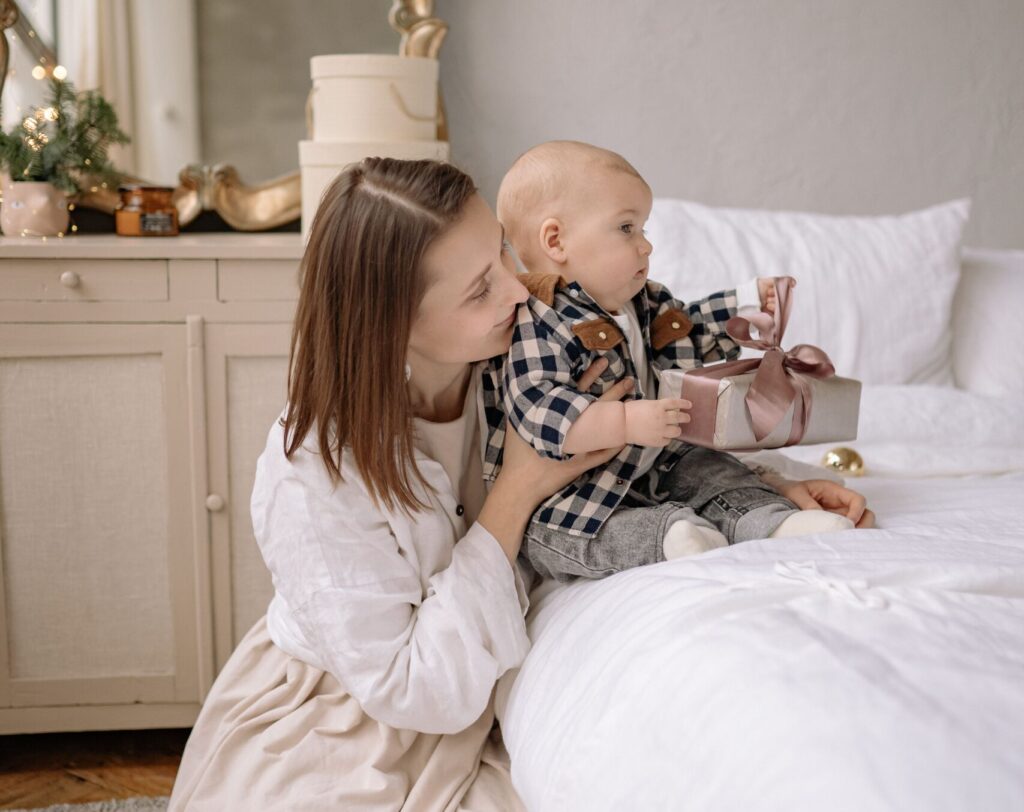
In many cultures around the world, the 40 days after birth are treated as a protected period. The new mother does not cook. She does not clean. She does not receive visitors who expect to be entertained. She rests, heals, and is cared for by the people around her while her body does the significant work of postpartum recovery.
In Canada, most new mothers receive a casserole, a visit, and a onesie. And then everyone goes home.
The 40-day postpartum period is not a cultural relic. It is a biologically grounded framework for recovery that modern medicine is increasingly validating. The body after birth needs rest, warmth, nourishment, and support — not a return to normal functioning as quickly as possible.
This guide is for everyone who wants to give a gift that actually honours that. Not something decorative. Not something for the baby. Something that supports the mother through one of the most demanding periods of her life.
Why 40 Days
The number 40 appears across cultures — in Latin American cuarentena, in Chinese zuò yuèzi (sitting the month), in Middle Eastern and South Asian postpartum traditions — not because of coincidence but because of convergent understanding. The body after birth needs approximately six weeks to complete the most significant phase of physical recovery.
In those six weeks:
- The uterus involutes — contracting from the size of a watermelon back to its pre-pregnancy size
- The placental attachment site heals — a wound approximately the size of a dinner plate on the interior uterine wall
- Hormone levels shift dramatically — estrogen and progesterone drop sharply while prolactin rises for breastfeeding
- Blood volume, which increases by approximately 50 percent during pregnancy, redistributes and normalizes
- Perineal tissue, abdominal muscles, and pelvic floor structures begin to repair
This is not a minor adjustment. It is a full physiological reconstruction — happening simultaneously with the demands of round-the-clock newborn care, sleep deprivation, and the emotional magnitude of new parenthood.
The Society of Obstetricians and Gynaecologists of Canada recommends comprehensive postpartum care through the full six-week period — a recognition that the standard six-week check is the minimum, not the ceiling, of postpartum support.
Gifts that honour the 40-day framework are gifts that support this recovery process rather than expecting the mother to perform normalcy around it.
Week One: The Immediate Postpartum Period
The first week after birth is the most acute phase of physical recovery. Whether the birth was vaginal or cesarean, the mother’s body is doing enormous work. Her primary need is rest, nourishment, and freedom from any demand that is not feeding the baby.
Gifts for Week One
Prepared meals delivered to the door. Not ingredients. Not a gift card that requires a decision. Actual prepared meals that can be reheated with one hand while holding a baby with the other. Soups, stews, grain bowls, anything nutritionally dense and easy to eat. If you are coordinating with others, a meal train through the first two weeks is one of the most meaningful things a community can offer.
A postpartum recovery kit. The physical recovery supplies that hospitals send you home with are minimal. A thoughtfully assembled kit makes a real difference in the first week. Our Postpartum Recovery Essentials guide covers exactly what helps — peri bottles, cooling pads, sitz bath soaks, nipple balm, comfortable postpartum underwear. These are the things she actually needs and almost no one thinks to give.
Housekeeping help. One professional cleaning session in the first week removes a source of ambient stress that is impossible to overstate. Book it. Pay for it. Show up and do it yourself if that is what you can offer. Do not ask what needs doing — just do it.
Groceries. Stock the fridge before you leave. Ask what she needs and bring it without requiring her to plan the list herself. A breastfeeding mother needs approximately 500 additional calories per day — easy-to-reach snacks, drinks, fruit, things that require no preparation.
Weeks Two and Three: The Wall
Around the second week, many new mothers hit what is sometimes called the wall. The adrenaline of birth has worn off. The baby is still waking every two hours. The visitors have stopped coming. The partner may have returned to work. The reality of the fourth trimester settles in without the initial buffer of shock and newborn novelty to cushion it.
This is when practical, ongoing support matters most — and when it most often disappears.
Gifts for Weeks Two and Three
A meal delivery subscription. Services like HelloFresh, GoodFood, or Goodfood cover the planning and shopping burden for two to four weeks. Pre-portioned, ready to cook, delivered to the door. The cognitive load reduction alone is significant.
Laundry help. In the first weeks after birth, laundry volume increases dramatically — burp cloths, fitted sheets, swaddles, postpartum pads, baby clothes changed three times a day. Offering to come over, collect the laundry, wash it, fold it, and return it is an extraordinarily useful gift that almost no one thinks to offer.
A grocery delivery service subscription. Two to four weeks of grocery delivery means she does not have to leave the house, navigate a shopping cart with a newborn, or make decisions about food while exhausted. Instacart, Walmart Grocery, or Amazon Fresh subscriptions are simple to gift.
Company that does not require entertaining. Showing up, making tea, holding the baby while she showers, and leaving without needing to be fed or conversed with extensively is a gift. Come with a purpose. Go when the purpose is served.
For more on what new moms actually need during this period versus what they typically receive, our Gifts That Actually Help After Birth guide covers the full picture.
Weeks Four Through Six: The Long Middle
By week four, expectations from the outside world begin to creep back in. People assume the mother is recovering well. The newborn has doubled in size and looks less fragile. The assumption is that things are normalizing.
For most mothers, they are not. Sleep debt is cumulative and significant. The physical recovery is ongoing. The emotional complexity of new parenthood — identity shift, relationship changes, the mental load, the particular grief of lost freedom — is fully present and largely unacknowledged.
This is the phase where support tends to drop off entirely. It is also the phase where gifts that extend beyond the immediate are most meaningful.
Gifts for Weeks Four Through Six
A postnatal massage or physiotherapy session. Registered massage therapy and pelvic floor physiotherapy are both valuable at this stage of recovery. In Canada, many extended health plans cover both — but the mental bandwidth to book an appointment is often what is missing. Gift a session at a clinic, include the booking details, and offer to come over and hold the baby while she goes.
A postpartum doula session. Postpartum doulas provide practical support — feeding guidance, newborn care, light housework — as well as emotional support and information. A single session or a package of hours is a genuinely useful gift for a mother who is doing all of this without significant help nearby. The Canadian Doula Association maintains a directory of certified postpartum doulas across Canada.
Books, podcasts, or a streaming subscription. The middle of the night during cluster feeding is very long. A Spotify Premium subscription, an Audible credit, a Kindle Unlimited membership, or a curated list of podcasts costs almost nothing and is used more than most physical gifts.
A prepared freezer. If you have access to the mother before birth or in the early weeks, batch-cooking and stocking the freezer with meals that reheat easily extends support beyond the period when people are actively showing up. Soups, curries, pasta sauces, breakfast burritos — anything portioned and labelled with reheating instructions.
A plant, not flowers. Cut flowers die within a week and require disposing of. A low-maintenance plant — a pothos, a snake plant, something that requires minimal attention — lasts and provides ambient comfort without creating a task.
The Gift of Ongoing Presence
The most valuable postpartum gift cannot be purchased. It is showing up — reliably, repeatedly, without needing to be asked — across the full 40 days and beyond.
It is the friend who texts every Thursday to ask what groceries she needs and then brings them. The family member who takes the baby for a walk every Saturday morning so the mother can sleep. The colleague who drops food at the door without expecting to come in.
These gestures do not require money. They require consistency and the understanding that postpartum support is not a one-time event but a sustained presence across a period that is genuinely hard.
The mental load of new motherhood — tracking every need, managing every task, holding every open loop — is significantly lighter when the people around a new mother take ownership of specific, recurring tasks without being asked. Our Mental Load of New Motherhood guide goes deeper on what that load actually looks like and how it can be redistributed.
What to Avoid
A few gift categories that are well-intentioned and largely unhelpful in the postpartum period:
Baby clothes in newborn sizing. She likely has more than she needs, and newborns outgrow them within weeks. If you are giving clothing, give 3-6 month or 6-9 month sizing.
Gifts that require assembly, registration, or decision-making. Any gift that creates a task is not a postpartum gift.
Scented candles, bath products with fragrance, or anything heavily perfumed. Newborn sensitivity to fragrance is significant — many mothers cannot use these during the early weeks. Fragrance-free everything is the safe choice for postpartum gifting.
Advice. Unsolicited parenting advice is not a gift. It is a tax on someone who is already paying a significant one.
Visits that require hosting. If you come over expecting tea, conversation, and a held baby to be presented to you on arrival, you are not giving support. You are requesting it from someone who has none to spare.
The Framing That Changes Everything
The shift that makes postpartum gifting meaningful is simple: stop asking what the baby needs and start asking what the mother needs to heal.
The baby is being cared for. The mother is often not. Every gift, every gesture, every offer of help that is directed at her recovery, her rest, her nourishment, and her sense of being seen communicates something she needs to hear more than almost anything else in this period.
You matter. Not just as the person responsible for the baby. You, specifically. Your body and your recovery and your experience of this — those things matter.
That is what the best postpartum gifts say. Everything else is decoration.
For a full picture of what the postpartum body needs in the first six weeks, our Postpartum Recovery Essentials guide covers the physical side in detail. And our 7 Basic Needs of a Child guide is worth reading alongside this one — because understanding what your baby needs helps you understand why your own recovery directly serves them.
→ Read our Postpartum Recovery Essentials guide — what the postpartum body actually needs in the first six weeks.
→ Read our Gifts That Actually Help After Birth guide — the full list of what new moms wish they’d received.
→ Read our Mental Load of New Motherhood guide — the invisible labour of new parenthood and how to redistribute it.
→ Shop the Cradle Song Co collection — curated essentials for pregnancy, postpartum, and baby’s first year.