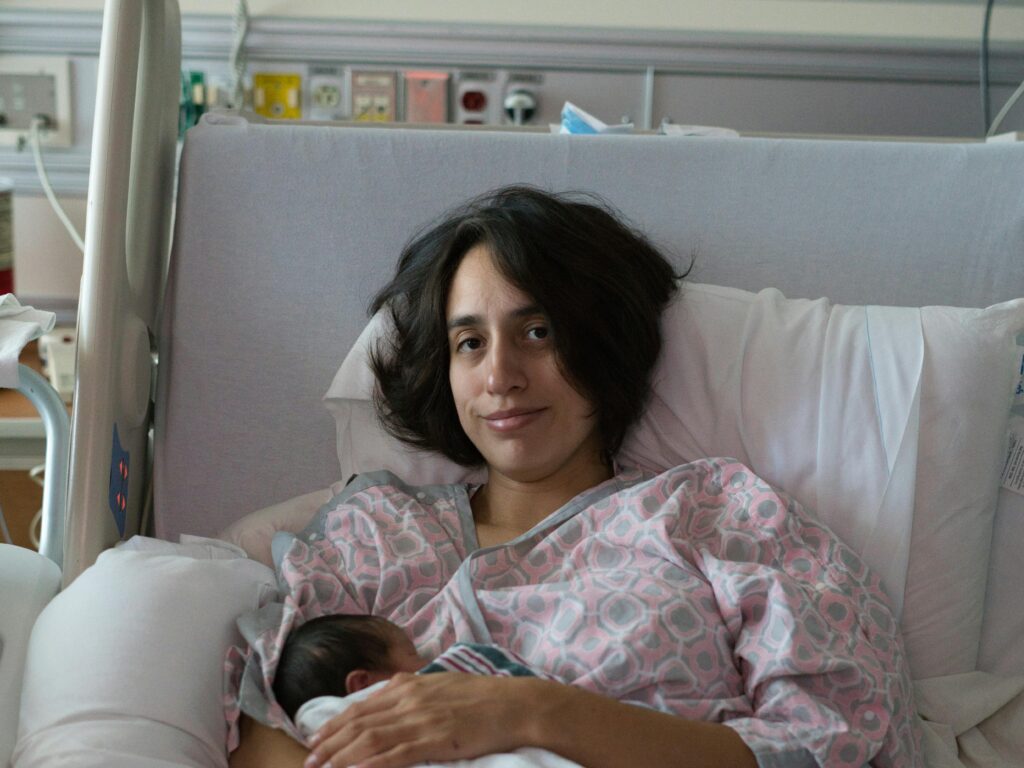
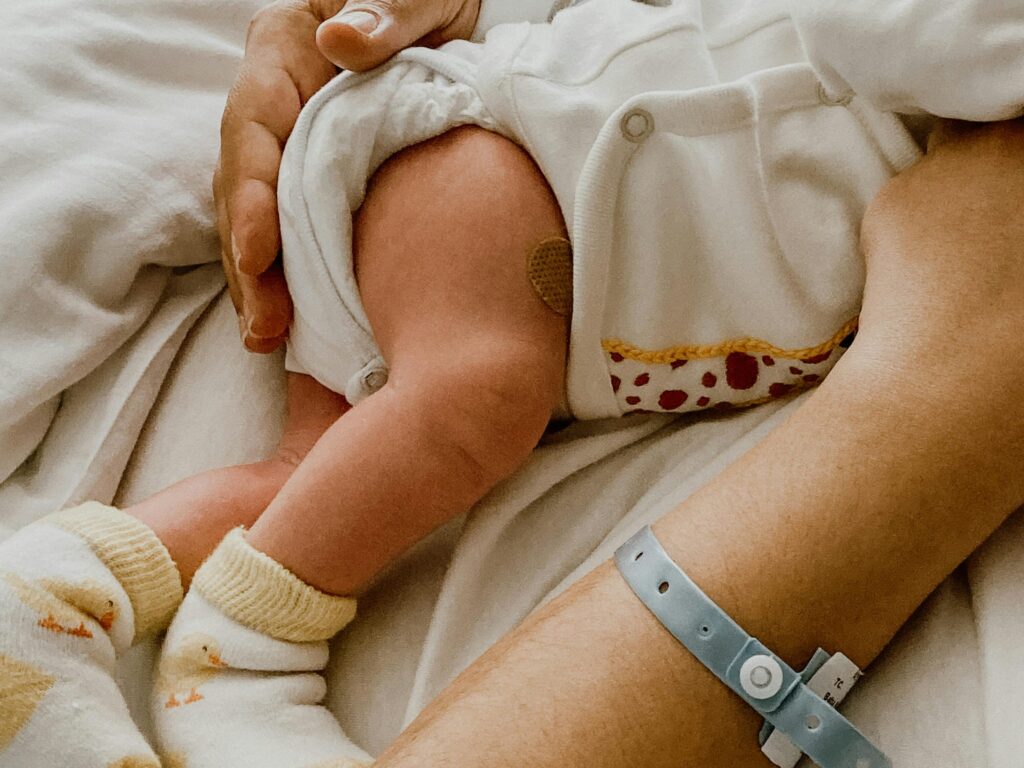
The first hour after your baby is born has a name in obstetric care. It is called the golden hour. And despite how significant it is — for you, for your baby, and for the bond forming between you — most people arrive at it with very little idea of what is actually going to happen in the room.
Labour and delivery preparation tends to focus on the labour itself. The contractions, the pushing, the pain management, the birth plan. What comes after is often left as a vague, emotional blur in the imagination — baby arrives, everyone cries, it’s beautiful.
It is beautiful. It is also busy, clinical in places, and full of things happening to both you and your baby that nobody walked you through in advance. This guide changes that.
Why the First Hour Matters So Much
The golden hour is not a sentimental label. It reflects a growing body of evidence showing that the first 60 minutes after birth are a critical window for physiological and neurological processes in both mother and baby that have lasting effects.
For your baby, this hour involves the most significant environmental transition of their entire life — from the warm, fluid-filled, low-stimulation environment of the womb to the world outside, with all of its light, sound, temperature variation, and gravity. The support your baby receives in this window directly affects how smoothly that transition goes.
For you, this hour involves the delivery of the placenta, the beginning of hormonal shifts that support bonding and milk production, and the initial assessment of your own physical condition after birth.
The Society of Obstetricians and Gynaecologists of Canada (SOGC) supports uninterrupted skin-to-skin contact during this period for healthy mothers and babies, and recommends that routine newborn procedures be delayed where possible to protect this window.
The First Minutes: What Happens Immediately After Delivery
Your Baby Is Placed on Your Chest
In an uncomplicated vaginal delivery, your baby will be placed directly on your chest — skin-to-skin — within seconds of being born. They will be wet, covered in vernix, and may be bluish-purple in colour initially. This is normal. The colour change to pink happens within the first minute or two as breathing establishes.
The warmth of your body is the most effective thermoregulation available to your newborn. Your chest stabilizes their temperature more precisely than any warmer. A warm blanket will be placed over both of you.
The Cord Is Not Cut Immediately
Current Canadian practice guidelines support delayed cord clamping — waiting at least 60 seconds, and ideally until the cord stops pulsing, before it is clamped and cut. During this time, iron-rich blood continues flowing from the placenta to your baby, reducing the risk of anemia in the first year.
If you have a birth partner who wants to cut the cord, this happens after clamping — your care team will guide them through it.
Your Baby’s First Breath and Cry
Most babies take their first breath and cry within the first 30 to 60 seconds of birth. The cry is not just an emotional moment — it is a physiological event. The act of crying forces fluid out of the lungs and fully inflates the air sacs for the first time.
A baby who does not cry immediately is not necessarily in distress. Some babies breathe quietly without crying. Your care team is watching closely and will act immediately if intervention is needed.
The First 15 Minutes: Assessment and Stabilization
The APGAR Score
At one minute and five minutes after birth, a nurse or midwife will perform the APGAR assessment — a quick scoring of your baby’s appearance, pulse, grimace response, activity, and respiration. Each category is scored zero to two, with a combined score of seven to ten considered normal.
This happens quietly and quickly, often while your baby is on your chest. You may barely notice it. The scores will be announced and documented, and you can ask what they mean at any point.
Your Baby Is Dried and Kept Warm
If your baby is on your chest, drying happens there — a warm towel or blanket, gentle rubbing that also provides mild stimulation. A small hat is placed on their head promptly, since newborns lose significant heat through their scalp.
If your baby needs additional assessment or support, they will be moved to a radiant warmer in the same room while the care team works. You will be able to see them. Your birth partner can stay with the baby.
Your Care Team Monitors You
While your baby is being assessed, your care team is also monitoring you. They are watching for postpartum hemorrhage — excessive bleeding after delivery — which is the most common serious complication of the immediate postpartum period. Your blood pressure, pulse, and bleeding are being tracked.
You may receive oxytocin — either as an injection or through an IV — to help your uterus contract and reduce bleeding. This is standard practice in Canadian hospitals for all deliveries.
The First 30 Minutes: The Third Stage of Labour
Delivery of the Placenta
The delivery of the placenta is the third stage of labour, and it is the part most people forget is happening at all. It typically occurs within 5 to 30 minutes after the baby is born.
You will feel mild contractions as the placenta separates from the uterine wall. Your care provider will ask you to push once or twice. The delivery itself is considerably less intense than delivering the baby — most women describe it as pressure rather than pain.
Your care provider will examine the placenta after delivery to confirm it is complete. Retained placental tissue is a cause of postpartum hemorrhage, so this step is not skipped.
Repair of Tears or Episiotomy
If you have a perineal tear — which occurs in the majority of vaginal deliveries — or an episiotomy, your care provider will assess and repair it during this time, typically while your baby is on your chest.
Local anesthetic is used. The repair takes anywhere from a few minutes to considerably longer depending on the extent of the tear. You can hold your baby throughout this process.
If you have a significant tear, your care provider will explain the degree — first through fourth degree — and what recovery looks like. Our Postpartum Recovery Essentials guide covers perineal recovery in detail, including the products that genuinely help in the first weeks.
The First Hour: Skin-to-Skin and the First Feed
Uninterrupted Skin-to-Skin Contact
The goal — and the standard in most Canadian hospitals and birth centres — is for healthy mothers and babies to remain in uninterrupted skin-to-skin contact for the full first hour. Routine procedures including weighing, measuring, bathing, vitamin K injection, and eye ointment are delayed until after this window.
This is worth knowing in advance and worth putting in your birth plan explicitly. Nursing staff are generally supportive of this approach, but a busy delivery room can default to moving through procedures quickly. Having it documented means you have a clear basis to ask for it to be honoured.
The First Feeding Opportunity
The first hour after birth is when the feeding instinct is strongest in a newborn. Babies in skin-to-skin contact with their mothers will often self-attach — moving toward the breast through a sequence of rooting, mouthing, and latching behaviours that emerge without prompting.
This is called the breast crawl, and watching it happen is one of the more remarkable things a new parent can witness.
If you are planning to breastfeed, this first feed matters — both for milk supply establishment and for baby’s intake of colostrum, the early milk that is dense with antibodies and immune factors. Ask for a lactation consultant or nurse support if you need help with positioning or latch.
If you are not breastfeeding, skin-to-skin contact remains just as valuable. The bonding, thermoregulation, and stabilization benefits are independent of feeding method.
Bonding and the Hormonal Landscape
Oxytocin — sometimes called the bonding hormone — surges in both you and your baby during skin-to-skin contact. It drives the feelings of protectiveness, attachment, and overwhelming emotion that characterize those first minutes. It also triggers the let-down reflex for breastfeeding and supports uterine contraction, which reduces postpartum bleeding.
This is not sentiment. It is physiology. And it is one of the reasons uninterrupted skin-to-skin in the first hour is worth protecting.
What Happens in a Cesarean Section
A cesarean delivery changes the logistics of the golden hour but does not have to eliminate it.
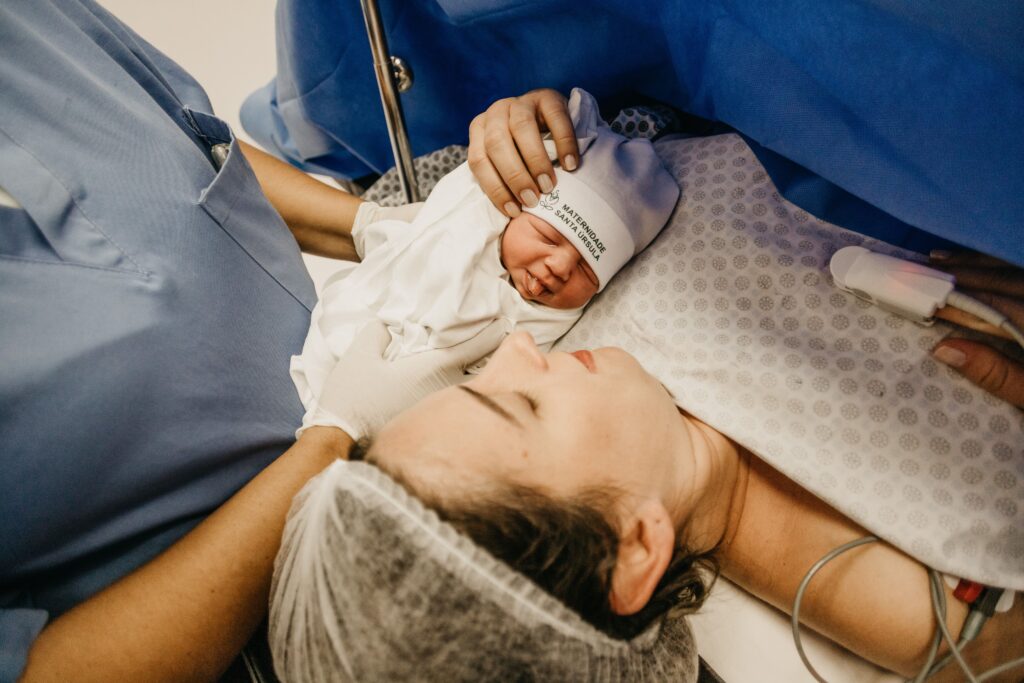
In many Canadian hospitals, skin-to-skin contact in the operating room is now possible and increasingly standard practice. Your baby, once delivered and briefly assessed, can be placed on your chest while the surgical closure is completed — with a nurse or your birth partner nearby.
If this matters to you, discuss it with your OB before your surgery date and document it in your birth plan. Specifically request:
- Skin-to-skin in the OR if baby is stable
- Delayed cord clamping where safely possible in the surgical context
- Baby to remain with you or your birth partner rather than going to a nursery
Not every situation will allow for all of these — a baby who needs immediate medical attention takes priority — but in an uncomplicated cesarean, these requests are reasonable and increasingly accommodated.
Routine Newborn Procedures That Happen After the Golden Hour
Once the first hour has passed, the care team will complete the routine newborn procedures that were deferred:
- Weighing and measuring — length, head circumference, weight
- Vitamin K injection — a single dose to prevent Vitamin K Deficiency Bleeding, recommended for all newborns in Canada
- Erythromycin eye ointment — applied to prevent eye infection from bacteria that may be present in the birth canal
- Newborn physical examination — a head-to-toe assessment by a physician or midwife checking for any concerns
- Hearing screening — performed before discharge in most Canadian hospitals
- First bath — typically delayed at least 24 hours in current best practice, which preserves the vernix coating that protects newborn skin
Your baby does not leave the room for any of these in standard practice. If your hospital has a procedure that would require your baby to be taken to another location, you can ask whether it can be done in your room instead.
What You Can Do to Prepare
The golden hour is not something you orchestrate — it unfolds around you. But knowing what is happening and why means you can be present for it rather than confused by it.
Practical steps before birth day:
- Write a birth plan that explicitly names skin-to-skin, delayed cord clamping, and deferred routine procedures
- Discuss your plan with your OB or midwife at your last prenatal appointment
- Share it with your birth partner so they can advocate for it if you are not in a position to speak for yourself in the moment
- Pack your hospital bag with recovery comfort in mind — because what happens in the hour after birth flows directly into the days that follow
Our Labour and Delivery Bag guide covers everything to pack for birth day, including items specifically useful in those first hours. And our Newborn Care After Delivery guide walks through the five clinical steps that happen to your baby in the first minutes — a useful companion read to this one.
→ Read our Labour and Delivery Bag guide — everything to pack for birth day, including what Canadian hospitals provide.
→ Read our Newborn Care After Delivery guide — the five steps that happen to your baby right after birth.
→ Shop the Cradle Song Co collection — curated essentials for pregnancy, postpartum, and baby’s first year.