This nursery setup guide covers everything Canadian moms need to create a functional, safe, and beautiful space for their baby — without the overwhelm. The nursery is the room you dream about from the moment you see those two lines on the test. It exists first in your head — the colour on the walls, the soft lighting, the tiny clothes hanging in size order — long before it exists in real life.
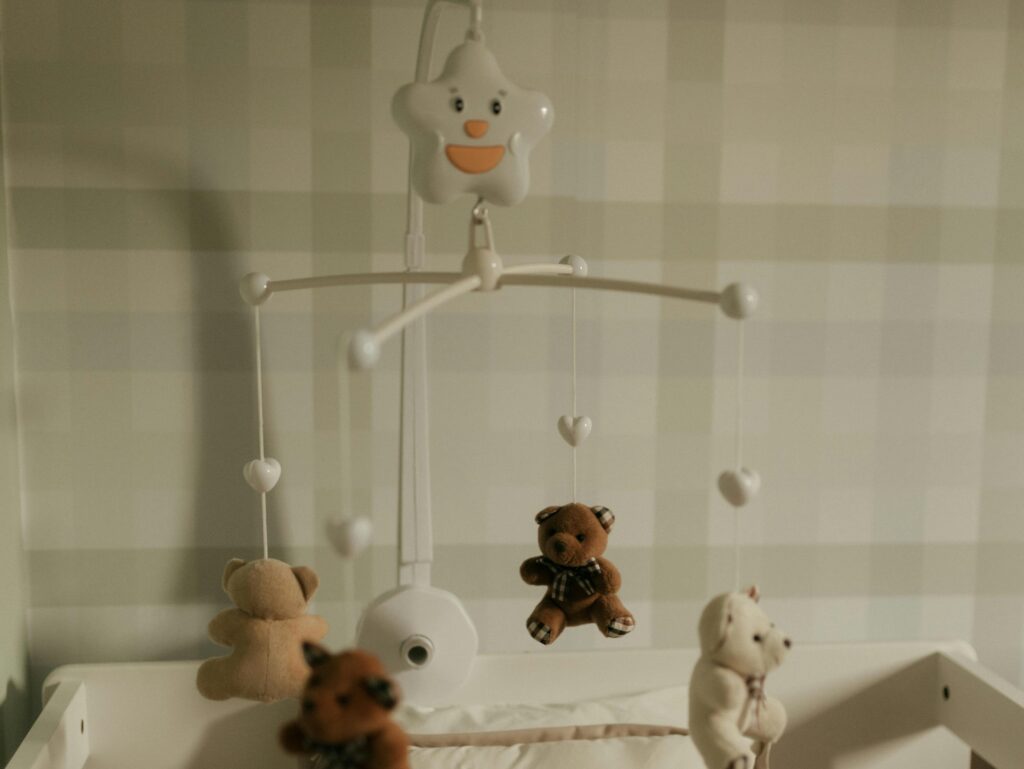
Then the actual work of setting it up begins. There are a lot of decisions and a surprising number of things nobody tells you until you are standing in a baby store feeling completely overwhelmed.
This nursery setup guide is the practical version. What you actually need, how to organize it for real use at 3am, and how to make a small space work just as well as a dedicated room.
Nursery Setup Guide: Start With Safety, Not Aesthetics
Before buying a single decorative item, anchor your furniture to the wall. Dressers, bookshelves, and wardrobes must be wall-mounted in any room where a toddler will eventually be pulling up on things. This is a Canadian safety recommendation under the Canada Consumer Product Safety Act and it is simply one of those things you will be glad you did.
Your crib must meet Health Canada’s current crib safety standard — SOR/2016-152. Any crib manufactured before 2016 may not comply. Drop-side cribs are illegal in Canada. The mattress must fit snugly with no more than two fingers’ width of space at any edge.
Get the safety right first. Decorate second.
Nursery Setup Guide: The Sleep Zone
The sleep area is the most important zone in any nursery setup guide. It affects the most important thing — whether everyone sleeps.
The crib or bassinet: Many families keep the baby in a bassinet in their own bedroom for easier night feeding in the first weeks. The nursery crib becomes more central around three to six months. Both approaches are completely valid.
The sound machine: This is not a luxury item. White noise mimics the constant sound environment of the womb. A baby who has heard your heartbeat and the muffled sounds of your daily life for nine months is not wired for silence. Place the sound machine between the crib and the door, not directly next to the baby’s head.
The nightlight: Warm and dim. Not blue-toned, not bright. Your ability to do a nappy change or a feed without fully waking either of you is the goal. Some sound machines include a built-in nightlight, which is a convenient two-in-one.
Layered fitted sheets: Put them on in layers — protector, sheet, protector, sheet. A middle-of-the-night blowout becomes a 30-second fix rather than a full bedding change.
Nursery Setup Guide: The Changing Zone
You will change this baby thousands of times. Your changing zone needs to be fast, organized, and always fully stocked.
The changing surface: A changing table, a dresser-top changing pad, or a portable changing pod you move between rooms. The portable pod style is particularly useful in smaller Canadian homes.
The diaper organizer: Behind-the-door organizers that hang on the nursery door keep diapers visible and accessible without taking floor space. The goal is simple: reach in, get what you need, don’t search.
What lives at the changing station at all times:
- Diapers in the current size with one size up stored nearby
- Unscented wipes within easy one-handed reach
- Barrier cream — fragrance-free, zinc oxide
- At least two or three changes of baby clothes
- A spare outfit for you — blowouts are directional and sometimes that direction is toward you
- Disposal bags
The wipe warmer: Cold wipes on a half-asleep baby at 3am produce a fully awake, screaming baby. A wipe warmer keeps things at a consistent temperature. Especially appreciated in Canadian winters.
Nursery Setup Guide: The Feeding Corner
Whether you are breastfeeding, bottle feeding, or both — you will spend a significant amount of time sitting in one spot feeding your baby. Make that spot genuinely good.
A comfortable chair or glider is worth investing in if you have space. You will sit in it for hours every single day for months. The chair you use matters enormously for your back, your hips, and your ability to not dread every feeding session.
A side table or feeding caddy within arm’s reach should hold your water bottle, your phone, a snack, your nipple balm, and anything else you use during feeds. You will almost never be able to get up mid-feed. Everything needs to already be there.
A mama quilt or throw for the nursing chair — for warmth during night feeds, for comfort during long cluster feeding sessions, and for those moments when you are sitting there exhausted and just need to be wrapped in something soft.
→ Check our Baby Registry Checklist to see which nursery items are worth registering for.
Organization Details That Actually Matter
Baby hangers keep the wardrobe organized and make it easy to sort by size. Use clothing dividers labelled by size — 0–3M, 3–6M, 6–12M — so you always know what is current.
Large zip-lock bags or vacuum storage bags for outgrown clothing. Label them by size and season. This habit will save you enormous time whether for a future baby or for donating with everything neatly sorted.
Labels and tags for bottles, feeding supplies, and anything that eventually goes to daycare.
Frames for milestone cards or first photos. The nursery is where you will spend a lot of time in the quiet hours. Having things on the walls that mean something to you changes how that space feels.
For a Shared Space or Small Nursery
Not every Canadian family has a dedicated nursery. Many babies share a room with siblings or parents for months or even years. That is completely fine.
In a shared space, a room divider or tall bookshelf creates visual separation. The sound machine becomes even more important for masking household and sibling noise. Vertical storage — wall shelves, door organizers, tall narrow units — maximizes a small footprint without taking floor space.
→ Read next: Baby Feeding Essentials: Silicone Gear and Introducing Solids
→ Read next: Baby Product Safety in Canada
→ Shop our Nursery and Organization collection at Cradle Song Co